





Analysis of Future Development Trends in the Peruvian Concrete Industry
Contents |
[edit] 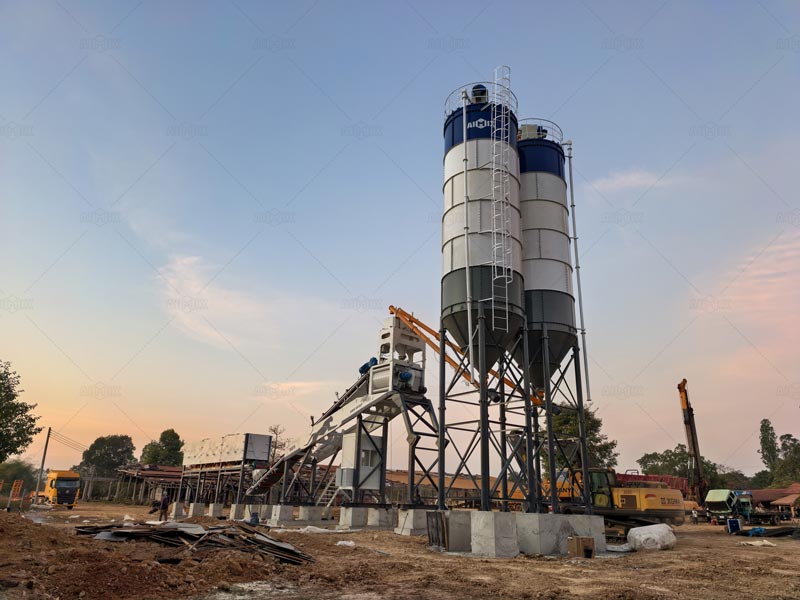

[edit] Introduction
Peru's construction sector is being influenced by continuing investment in transport infrastructure, mining, energy, ports, housing and urban development. The country's varied geography, which includes the Pacific coast, the Andes and remote highland areas, creates significant logistical and engineering challenges for the production and supply of concrete. These conditions are increasing the importance of batching systems that can provide consistent quality while adapting to project location, scale and duration.
Future development of the Peruvian concrete industry is likely to be characterised by greater use of mobile and modular batching equipment, increased automation, improved environmental performance and more sophisticated quality-control systems. These developments are particularly relevant to infrastructure and mining projects where reliable concrete production may be required close to remote construction sites.
[edit] Mobile and modular concrete production
Linear infrastructure projects, including roads, pipelines and other long-distance developments, can require concrete production facilities to operate close to advancing construction works. Fixed batching plants can provide high production capacity, but their installation may require significant site preparation and infrastructure. They may also result in longer transport distances between the batching plant and the point of concrete placement.
Mobile and modular batching plants can be dismantled, transported and reassembled at different locations. Their use can reduce the distance over which fresh concrete has to be transported and can be advantageous where projects move progressively through remote or difficult terrain. The appropriate choice depends on factors including the required production rate, project duration, available space, transport infrastructure and local environmental conditions.
Mobile equipment is therefore likely to remain important for infrastructure, mining and other projects in areas where establishing a permanent batching facility would be uneconomic or impractical. Stationary plants are likely to remain preferable for long-duration, high-volume production, particularly in urban areas and at major infrastructure sites.
[edit] Environmental performance and resource efficiency
Environmental performance is becoming an increasingly important consideration in concrete production. Batching facilities can incorporate systems for controlling dust, managing process water, reducing material losses and improving energy efficiency. Environmental requirements are particularly relevant where plants operate close to residential areas, sensitive environments or watercourses.
Water-recycling systems can recover water from concrete washout and, subject to the requirements of the concrete mix and applicable standards, allow some recovered water to be reused. Systems for recovering or separating unused aggregates and cementitious material can also reduce waste. Dust-control equipment, including enclosed material-transfer systems and suitable filters on cement storage silos, can reduce particulate emissions.
Reducing the cement content of concrete where technically appropriate can also reduce embodied carbon, since cement production is a significant source of greenhouse-gas emissions associated with conventional concrete. Supplementary cementitious materials and blended cements may be used where they are locally available and permitted by the relevant specifications and standards. Fly ash and ground granulated blast-furnace slag are established examples internationally, although their availability in Peru depends on local industrial supply. Natural pozzolans and other locally available supplementary cementitious materials may also have potential.
Energy-efficient motors, automated controls and accurate weighing systems can reduce resource consumption and improve batching consistency. Environmental performance is therefore likely to become increasingly integrated into the design and operation of both stationary and mobile concrete plants.
[edit] Automation and quality control
Digitalisation is changing the way concrete batching plants are controlled and monitored. Computerised batching systems can control the weighing and proportioning of aggregates, cementitious materials, water and chemical admixtures according to specified mix designs. Automated systems can also record individual batches, helping to provide traceability for quality-control and construction records.
Moisture measurement in aggregates is particularly important because variations in aggregate moisture content affect the amount of water introduced into a concrete mix. Moisture sensors can be used to adjust the quantity of added water, helping to maintain the specified water-to-cementitious-material ratio. The effectiveness of such systems depends on appropriate sensor calibration, representative measurement and suitable control algorithms.
Remote monitoring and diagnostics can provide information about plant operation, material inventories, equipment status and faults. These capabilities may be particularly useful for plants serving remote construction sites, although reliable communications infrastructure and appropriate cybersecurity measures are required.
Automation does not eliminate the need for conventional quality-control procedures. Calibration of weighing equipment, verification of moisture measurements, testing of fresh concrete and sampling of hardened concrete remain important for demonstrating compliance with project specifications and applicable standards.
[edit] Regional supply and procurement considerations
Peru's construction industry operates within wider South American markets for construction materials, equipment and engineering services. Regional supply chains can provide access to machinery, components and specialist services, but the suitability of equipment must be assessed against Peruvian regulatory requirements, site conditions and project specifications rather than assumed from its use elsewhere.
High-altitude construction presents particular engineering considerations. Reduced atmospheric pressure can affect the performance of combustion engines and other equipment, while low temperatures can affect materials, lubricants, water systems and electrical equipment. Batching plants intended for high-altitude operation should therefore be assessed for the environmental conditions at the intended site. Access to spare parts, maintenance personnel and technical support can also be an important factor where plants are operating far from major population centres.
Transportability is another significant procurement consideration for mobile plants. Equipment dimensions, axle loads, road conditions and transport regulations can affect the practical ease and cost of relocating a plant. Modular construction can simplify transportation and installation, but the number of components, lifting requirements and site preparation still need to be considered during project planning.
[edit] Future development of the Peruvian concrete industry
The future development of the Peruvian concrete industry is likely to involve a combination of increased production capacity, greater mobility, improved automation and stronger environmental controls. Mobile and modular plants are well suited to projects where concrete production needs to follow construction activity, while stationary facilities will continue to support large-scale and long-duration operations.
Greater use of digital batching controls and automated moisture correction can improve consistency and traceability, provided that equipment is correctly calibrated and supported by appropriate testing procedures. At the same time, resource-efficient production methods, water recycling and lower-carbon cementitious materials are likely to become increasingly important as environmental requirements and sustainability objectives develop.
The most appropriate batching strategy will ultimately depend on project-specific factors including production volume, location, duration, concrete specifications, transport requirements, environmental constraints and access to materials and technical support. In Peru, the combination of diverse geography and continuing infrastructure and industrial development makes flexibility and logistical efficiency particularly important considerations in the planning of future concrete production facilities.
[edit] Related articles on Designing Buildings
Featured articles
Check out some of the best features and news from Designing Buildings as well as key stories from around the web.

CIOB publishes free template to help assess and manage risks.
ECA's reflections on Party Conference season

Burnham wants to be confident of winning before asking for a fresh mandate.
New Chief Construction and Scientific Adviser

Sergio Cavalaro, Professor of Infrastructure Systems at Loughborough University.
Building safety levy for England

CIAT publish estimator tool for members.

Water sector faces a growing crisis that could slow the delivery of vital infrastructure.
Undervaluing our industrial past

Heritage value changes as taste for building styles changes.
Changing expectations around competence and compliance

New information sheet from CIAT.
Grenfell investigation files passed to CPS

Angela Rayner apologises on behalf of the British state.

Electrical contractors need to understand the practical implications.

The real barrier to getting more value from digital technology.

Your guide to The Construction Reset at UKCW Birmingham.

Accommodating the Victorian and Edwardian working woman. Book review.